
• WayAhead Directory
  • Understanding Anxiety
  • Mental Health Month
  • PNDA
  • WayAhead Workplaces
  • Membership

WayAhead

Mental Health - Education, Support and Prevention

  • About Us
    • Who we are
    • Strategic Plan
    • Diversity and Inclusion Strategy
    • Board Members
    • The Team
    • Supporters
    • Public Statements
      • WayAhead welcomes Federal Government’s $100 million youth mental health funding announcement
      • 2017 Mental Health Matters award winners announced
      • OCD and Anxiety Awareness Week 2017
      • Marriage equality debate, our message to the LGBTI community
      • NAIDOC Week
      • Diversity and Inclusion Strategy
      • IDAHOT Statement
      • Top 5 ways to support employee’s mental health 
      • WayAhead’s Response to the 2017 Federal Budget
    • Annual Reports
      • 2017
      • 2016
      • 2015
      • 2014
      • 2013
      • 2012
      • 2011
      • 2010
    • Sign Up to our eNews
    • Shop
      • Books
        • Anxiety
        • Attention Deficit Disorder
        • Bipolar
        • Depression
        • Drugs and Alcohol
        • Obsessive Compulsive Disorder
        • Psychosis
      • Membership
  • Get Involved
    • Membership
      • Members Log In
    • Sign Up to our eNews
    • Donations, philanthropy, bequests
    • Volunteer
    • Become a Facilitator
    • Work for us
  • Facts & information
    • Fact Sheets
      • Mental Illness and Related
        • ADHD
        • Agoraphobia
        • Alcohol and Other Drugs
        • Alcohol related harm
        • Antisocial Personality Disorder
        • Anxiety
        • Bipolar Disorder
        • Body Dysmorphic Disorder
        • Borderline Personality Disorder
        • Depression
        • Domestic and Family Violence
        • Drug Induced Psychosis
        • Eating Disorders
        • The Empty Nest Syndrome
        • Factitious Disorder
        • Generalised Anxiety Disorder
        • Loss and Grief
        • Medicare Rebates and Accessing Private Practitioners
        • Mental Health Act 2007
        • Mental Health During Pregnancy and Early Parenthood
        • Mental Health Care for Immigrants
        • Mental Health Jargon
        • Obsessive Compulsive Disorder
        • Panic Disorder
        • Paranoia
        • Post Traumatic Stress Disorder
        • Psychosis
        • Schizophrenia
        • Self-harm
        • Social Anxiety
        • Who Can Help and How?
      • Supporting and Caring
        • Caring for a Parent with a Mental Illness
        • Help! It’s out there
        • How is your Mental Health?
        • Looking After Yourself and Your Family
        • Stigma
        • Understanding the Illness
        • When someone needs help but is not willing to get help
        • Where to Seek Support
        • Who Can Help and How?
        • Your GP and Mental Health Care
      • Maintaining Well-being
        • 10 Tips to Stress Less during the Holidays
        • Cyber Bullying
        • Building Resilience
        • Learn & Grow
        • Mindfulness
        • Physical Activity and Health
        • Physical exercises for older people to improve wellbeing
        • Recognising and Managing Stress
        • Release, Respond, Rethink
        • Sleep and Health
      • Translations
        • Bengali বাংলা
        • Simplified Chinese 简体中文
        • Nepalese नेपाली
    • WayAhead Directory
    • Telephone Support Lines
    • Wallet Cards
    • Understanding Anxiety Forums
    • Stress Less Tips
  • Anxiety Programs
    • Support Groups
      • Support Group meetings Calendar
      • Support Group locations
      • What happens at a Support Group Meeting?
    • Small Steps Seminars
    • Understanding Anxiety Forums
  • Mental Health Promotion
    • Mental Health Month
    • Mental Health Matters Awards
    • Stress Less Tips
    • WayAhead Workplaces
    • Perinatal Depression and Anxiety Awareness Week
    • OCD and Anxiety Disorders Awareness Week
    • Speaker Series
  • Forums
    • Lived Experience Forum
    • Carers Forum
  • Mind Reader
    • CEO Reports
    • Feature Stories
    • Lived Experience Stories
    • Research
    • Mental Health News
    • WayAhead Work

Responding to refugees’ mental health needs in South-West Sydney
October 6, 2017

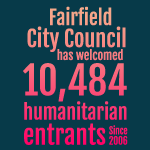
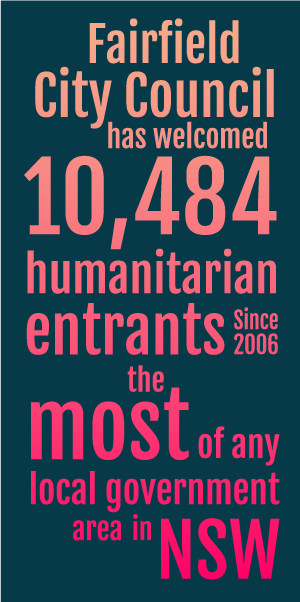
Fairfield is best known for its vibrancy and diversity of its residents, with a large proportion having a migrant background. Migrants have continually gravitated towards Fairfield for its long history of providing a home and a community for migrants. Since 2006, Fairfield City Council has welcomed 10,484 humanitarian entrants – the most of any local government area in NSW and almost double the number in Liverpool, according to the Settlement Reporting Facility of Department of Social Services.

In September 2015, the Australian government announced that it would resettle an additional 12,000 refugees in addition to the Refugee and Humanitarian Program, as a response to the global refugee crisis. It was estimated that about half of this special intake would be resettled in Fairfield, a suburb of about 18,000 people in the south-west of Sydney.
WayAhead spoke to Professor Newman about the challenges that refugees have experienced including trauma and trauma-related depression or stress when settling into the community, as well as the necessity for increased resources to respond to their needs.

“I have seen the whole spectrum of mental health issues displayed by refugees. I think they are very poorly understood and need more dedicated trauma-related mental health services because the impact of fleeing their homes for another country can be very damaging and long-term,” Professor Louise Newman explained.

Professor Newman has a background in child psychiatry, and worked with child refugees in south-western Sydney when she was conducting research around children and their mental health. She also worked with the Immigration Department Advisory Committee in 2013, working on reforms with the immigration policy amid growing concerns about offshore processing and detention centres.

“It is hard for refugees to reintegrate within society with these mental health issues. Some people come from certain countries and may not understand what mental health services are. They may not have had access to such support in their countries of origin but many refugees will accept mental health services if help is offered.”

Currently, all newly-arrived humanitarian entrants are eligible to receive initial, intensive settlement assistance through the Humanitarian Settlement Services (HSS) program in their first year of arrival. The services provided to help refugees settle in Australia generally include linking them to community programs to get assistance with finding accommodation and registering with schools, banks, Centrelink and other social services. When refugees show a need for mental health services, HSS may refer them to the Department of Health which offers the Programme of Assistance for Survivors of Torture and Trauma (PASTT) and NSW Services for the Treatment and Rehabilitation of Torture and Trauma Survivors (STARTTS).

STARTTS has a state-wide reach and provides a variety of services to refugees with a background of trauma. Their services include a balance of both community development activities and clinical approaches.

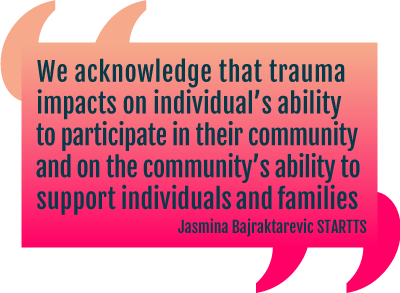
“We acknowledge that trauma impacts on individual’s ability to participate in their community and on the community’s ability to support individuals and families,” said Jasmina Bajraktarevic, the Community Services Coordinator of STARTTS. “We believe that intervention at any level of social system will have impact on the community level and will contribute to community strength.”
CORE Communities Services, a local organisation dedicated to refugee advocacy and policy work, assists refugees in navigating the Australian system including finding housing, employment, education and recreational activities to increase their social connections.

“I think there should be both investment in indirect and direct services addressing mental health for refugees. We plan activities to help refugees be more connected to the community, for example, excursions to different places of interest, like museums, or hold sporting activities that have great recreational benefits. These activities and outings have positive effects on refugees’ mental health as they are able to form social bonds and participate in the community,” explained Morlai Kamara, the Community Development and Policy Officer at CORE.

However, with the recent intake of resettlements, Fairfield is struggling to provide adequate resources for resettlement in such a short timeframe. “Indeed, [this is] five times our average annual settlement rate,” a spokesperson for Fairfield City Council said. “This translates into extraordinary pressure on the numerous community services and charities who are approached to help the new arrivals.”

“Immigration is a Federal Government responsibility and the settlement of refugees and migrants across the country is a national matter that requires open dialogue and action from the top tier of Australian government,” the Council said.

Demand for services is high with organisations having to expand to meet the need. Last year, STARTTS opened a new office in Fairfield in response to the growing demand for mental health services. In spite of increased pressures, the community in Fairfield remains open to resettling refugees and many non-government organisations continue to respond to their needs.

By Cindee Duong

Share this:

  • Click to share on Twitter (Opens in new window)
  • Click to share on Facebook (Opens in new window)
  • Click to share on Google+ (Opens in new window)

Filed Under: Features, Mental Health Matters, Spring2017

Thanks for reading

Your feedback and contribution to WayAhead is appreciated.

Please let us know of any ways we can improve this website.
 
 
WayAhead's Quarterly Online Magazine

Spring 2017 - Contents

 
  • CEO Report
   
  • Youth Unemployment

    The impacts of unemployment on youth mental health

  • Mental Health in Fairfield

    Responding to refugees' mental health needs in South-West Sydney

  • John Feneley

    Reflection from five years leading the NSW Mental Health commission

  • Mindfulness Meditation

    Four ways to work mindfulness into your daily routine

  • Virtual Reality Treatment

    The possibilities of virtual reality in treating mental illness

  • Mental Health in Sport

    Kicking goals for mental health in AFL

 
  • Youth Mental Health Stigma

    Tackling the elephant in the (school) room

  • Human Rights

    Being goes to the UN

  • WayAhead Celebrates 85 Years
 
  • Meet Lisa

    Creating connections in Cabramatta in the wake of OCD

  • Creating Your Own Fit

    The story behind Queanbeyan's Anxiety Support Leader

 
  • Sarah Wilson makes the Beast Beautiful

    Book Review

  • The Unsettling Power of Theatre

    Review of 4.48 Psychosis

 
  • What's on in Mental Health Month

    A snapshot of Mental Health Month events

  • OCD and Anxiety Disorders Week
  • Marriage Equality Debate

    Our message to the LGBTI community

 
  • Autumn Winter 2017
  • Spring/Summer 2016
  • Autumn 2016
  • Summer 2015/16

Get Support

Mental Health Support Line

1300 794 991

Anxiety Disorders Support Line

1300 794 992

5 days a week

9.00 - 5.00pm

Contact

Level 5, 80 William St
Woolloomooloo NSW 2011

info@wayahead.org.au

General Enquires:
(02) 9339 6000

Finance:
(02) 9332 0218

Human Resources:
(02) 9332 0241

Communications:
(02) 9339 6006

Website by

WayAhead is an ACNC registered Australian Charity and is endorsed by the Quality Improvement Council.

Supported by

WayAhead Websites

WayAhead Online Directory

Mental Health Month

Understanding Anxiety

WayAhead Workplaces

Stress Less Tips

Perinatal Depression and Anxiety

Connect with Us

  • Facebook
  • Instagram
  • Twitter
  • YouTube

© Copyright 2016 WayAhead - Mental Health Association NSW · All Rights Reserved ·