
• WayAhead Directory
  • Understanding Anxiety
  • Mental Health Month
  • PNDA
  • WayAhead Workplaces
  • Membership

WayAhead

Mental Health - Education, Support and Prevention

  • About Us
    • Who we are
    • Strategic Plan
    • Diversity and Inclusion Strategy
    • Board Members
    • The Team
    • Supporters
    • Public Statements
      • WayAhead welcomes Federal Government’s $100 million youth mental health funding announcement
      • 2017 Mental Health Matters award winners announced
      • OCD and Anxiety Awareness Week 2017
      • Marriage equality debate, our message to the LGBTI community
      • NAIDOC Week
      • Diversity and Inclusion Strategy
      • IDAHOT Statement
      • Top 5 ways to support employee’s mental health 
      • WayAhead’s Response to the 2017 Federal Budget
    • Annual Reports
      • 2017
      • 2016
      • 2015
      • 2014
      • 2013
      • 2012
      • 2011
      • 2010
    • Sign Up to our eNews
    • Shop
      • Books
        • Anxiety
        • Attention Deficit Disorder
        • Bipolar
        • Depression
        • Drugs and Alcohol
        • Obsessive Compulsive Disorder
        • Psychosis
      • Membership
  • Get Involved
    • Membership
      • Members Log In
    • Sign Up to our eNews
    • Donations, philanthropy, bequests
    • Volunteer
    • Become a Facilitator
    • Work for us
  • Facts & information
    • Fact Sheets
      • Mental Illness and Related
        • ADHD
        • Agoraphobia
        • Alcohol and Other Drugs
        • Alcohol related harm
        • Antisocial Personality Disorder
        • Anxiety
        • Bipolar Disorder
        • Body Dysmorphic Disorder
        • Borderline Personality Disorder
        • Depression
        • Domestic and Family Violence
        • Drug Induced Psychosis
        • Eating Disorders
        • The Empty Nest Syndrome
        • Factitious Disorder
        • Generalised Anxiety Disorder
        • Loss and Grief
        • Medicare Rebates and Accessing Private Practitioners
        • Mental Health Act 2007
        • Mental Health During Pregnancy and Early Parenthood
        • Mental Health Care for Immigrants
        • Mental Health Jargon
        • Obsessive Compulsive Disorder
        • Panic Disorder
        • Paranoia
        • Post Traumatic Stress Disorder
        • Psychosis
        • Schizophrenia
        • Self-harm
        • Social Anxiety
        • Who Can Help and How?
      • Supporting and Caring
        • Caring for a Parent with a Mental Illness
        • Help! It’s out there
        • How is your Mental Health?
        • Looking After Yourself and Your Family
        • Stigma
        • Understanding the Illness
        • When someone needs help but is not willing to get help
        • Where to Seek Support
        • Who Can Help and How?
        • Your GP and Mental Health Care
      • Maintaining Well-being
        • 10 Tips to Stress Less during the Holidays
        • Cyber Bullying
        • Building Resilience
        • Learn & Grow
        • Mindfulness
        • Physical Activity and Health
        • Physical exercises for older people to improve wellbeing
        • Recognising and Managing Stress
        • Release, Respond, Rethink
        • Sleep and Health
      • Translations
        • Bengali বাংলা
        • Simplified Chinese 简体中文
        • Nepalese नेपाली
    • WayAhead Directory
    • Telephone Support Lines
    • Wallet Cards
    • Understanding Anxiety Forums
    • Stress Less Tips
  • Anxiety Programs
    • Support Groups
      • Support Group meetings Calendar
      • Support Group locations
      • What happens at a Support Group Meeting?
    • Small Steps Seminars
    • Understanding Anxiety Forums
  • Mental Health Promotion
    • Mental Health Month
    • Mental Health Matters Awards
    • Stress Less Tips
    • WayAhead Workplaces
    • Perinatal Depression and Anxiety Awareness Week
    • OCD and Anxiety Disorders Awareness Week
    • Speaker Series
  • Forums
    • Lived Experience Forum
    • Carers Forum
  • Mind Reader
    • CEO Reports
    • Feature Stories
    • Lived Experience Stories
    • Research
    • Mental Health News
    • WayAhead Work

Mindfulness, Meditation and Mandalas
February 20, 2018

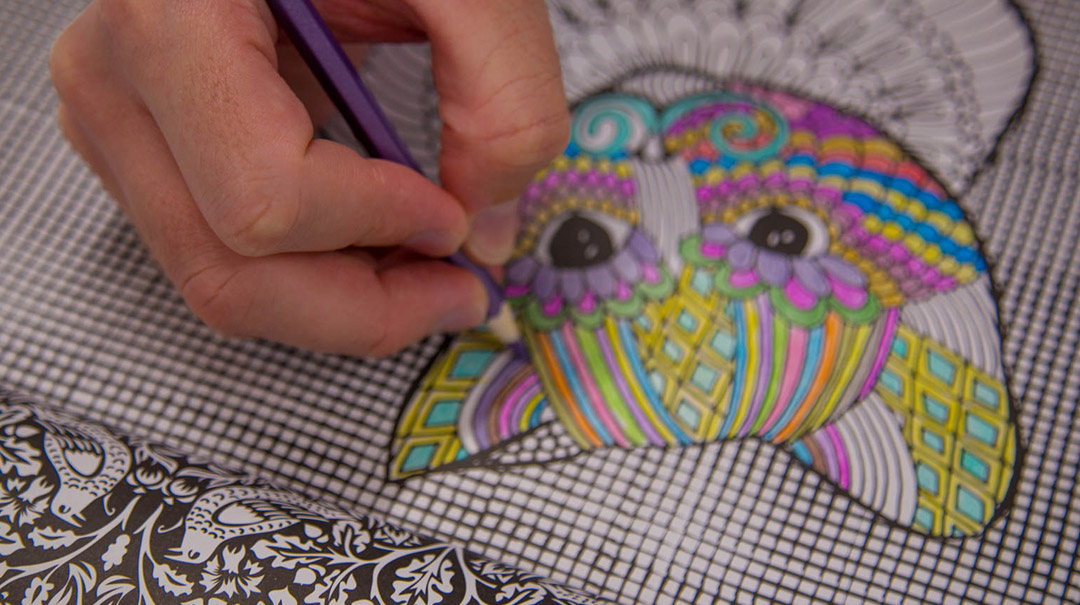
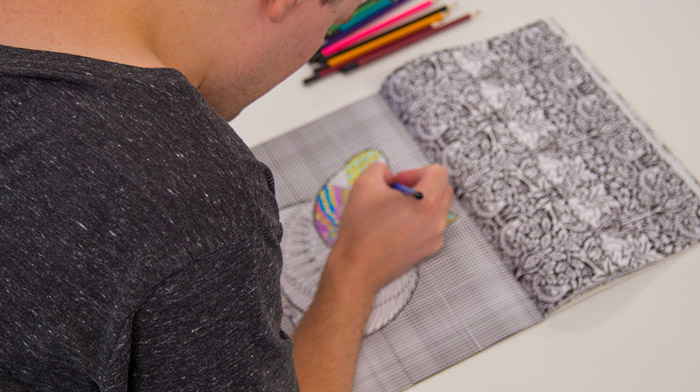
Adult colouring books have become widespread in recent years, driving up book sales from one million colouring books sold in 2014 to 12 million in 2015 (based on US statistics).[1] Adults are using the simple, nostalgic pastime of their childhood as a way to relax, unwind and even to ease stress or anxiety.

Adult colouring books differ from children’s colouring books because they do not feature cartoon characters but intricate and repetitive patterns, such as mandalas, which encourage adults to focus on the process, not the outcome.

Despite the rise in adult colouring book sales, there is relatively little research into colouring therapy. In 2005, Nancy A. Curry and Tim Kasser (Knox College in Galesburg, Illionois) completed a study into whether colouring mandalas could reduce anxiety in adults.[2] The study used a test sample of 84 university students split into three groups to test the theory. One group was given a blank sheet of paper, another was given a mandala pattern and the third group, a plaid pattern to colour for 20 minutes. Stress and anxiety levels were recorded before and after the experiment.

Curry and Kasser hypothesise that colouring therapy combines both elements of art therapy and meditation as it helps individuals to organise their ‘inner chaos’ with structured, patterned lines.[3] Their results showed that there was little to no change in anxiety levels within the free-form colouring group, but interestingly, there were similar results of decreasing anxiety in the mandala and plaid patterned group. Curry and Kasser (2005, p. 84) surmised that the mandala and plaid patterns helped to decrease anxiety because they provided structure which drew participants into a meditative-like state.[4]

Wayahead spoke to Dr Stan Rodski about adult colouring books and play therapies. Dr Rodski is a cognitive neuroscientist and creator of the popular Colourtation Anti-Stress colouring books for adults. A combination of colour and meditation, Dr Rodski explained that Colourtation is backed by neuroscience-based research work of what happens in the brain when we focus on singular tasks such as colouring.Having worked as a therapist for corporations, he observes that adults are increasingly leading busy lives. He believes that the technological advances of today place too much focus on a computer screen and has made many simple tasks obsolete; tasks that were once considered relaxing and therapeutic, such as knitting.“It was not only a necessity but also very therapeutic to just sit there and knit because it’s got all the elements: patterns, repetitions and control. But now it’s easier to buy our knitting,” Dr Rodski said.

[  FIND A WAYAHEAD ANXIETY SUPPORT GROUP NEAR YOU  ]

In 2013 and 2014, Dr Rodski conducted an experiment with 522 executives to compare the effectiveness of the Colourtation method and a standard ‘mindfulness’ based stress program, focusing on breathing techniques. His study found that the Colourtation method provided a viable stress-relieving activity, as it was an easy activity to pick up and maintain over a 6-month review period, whereas other activities, such as relaxation breathing techniques, generally decreased in practice over time.

However, while colouring therapy is popular and trendy, it does not equate to the application of traditional mindfulness training in mental health treatment. WayAhead also spoke to Alice Shires, the Psychology Clinic Director at the University of Technology, Sydney and Head of the Mindfulness Integrated Therapies Research Clinic, who thought that the term ‘mindful’ is overused.
“I don’t think it is accurate to apply it to colouring or other activities that involve some concentration or focus and perhaps serve to assist relaxation… [It is] fair to say that the rapid increase in the use of mindfulness as a description for activities reflects the enthusiasm for it but, as it has become popularised, it has lost some of its meaning and has been overused for what might be better described as relaxation or concentration activities,” Ms Shires explained.“I believe for it to be used therapeutically, it needs to be very clear with what the rationale and mechanisms of change are.”Dr Rodski also supports a wider response to maintaining mental wellbeing, clarifying that colouring books were a therapeutic process, not a treatment for mental health.

“I am an advocate of meditation, yoga and traditional mindfulness techniques but in the lives of busy people, colouring was a quick way to relax when you don’t have an hour or so to spare. Just focusing on colours and patterns bring control and balance to the mind which achieves homeostasis – a meditative-like state,” Dr Rodski explained.

By Cindee Duong

[1] Statista, 2018, Unit Sales of Adult Coloring Books in the United States in 2014 and 2015 (in millions), viewed 30 January 2018, <https://www.statista.com/statistics/531094/adult-coloring-books-sales-usa>

[2] Curry, N. and Kasser, T. ‘Can Coloring Mandalas Reduce Anxiety?’ Art Therapy Journal of the American Art Therapy Association. 2005, 81-85, viewed 30 January 2018, <https://eric.ed.gov/?id=EJ688443>

[3] Curry, N. and Kasser, T. ‘Can Coloring Mandalas Reduce Anxiety?’ Art Therapy Journal of the American Art Therapy Association. 2005, 81, viewed 30 January 2018, <https://eric.ed.gov/?id=EJ688443>

[4] Curry, N. and Kasser, T. ‘Can Coloring Mandalas Reduce Anxiety?’ Art Therapy Journal of the American Art Therapy Association. 2005, 84, viewed 30 January 2018, <https://eric.ed.gov/?id=EJ688443>

Back to most recent edition

 

Share this:

  • Click to share on Twitter (Opens in new window)
  • Click to share on Facebook (Opens in new window)
  • Click to share on Google+ (Opens in new window)

Filed Under: Features, Mental Health Matters Tagged With: Anxiety, Art, Colouring, Meditation, Mental Health, Mindfulness, Relax

Thanks for reading

Your feedback and contribution to WayAhead is appreciated.

Please let us know of any ways we can improve this website.

Get Support

Mental Health Support Line

1300 794 991

Anxiety Disorders Support Line

1300 794 992

5 days a week

9.00 - 5.00pm

Contact

Level 5, 80 William St
Woolloomooloo NSW 2011

info@wayahead.org.au

General Enquires:
(02) 9339 6000

Finance:
(02) 9332 0218

Human Resources:
(02) 9332 0241

Communications:
(02) 9339 6006

Website by

WayAhead is an ACNC registered Australian Charity and is endorsed by the Quality Improvement Council.

Supported by

WayAhead Websites

WayAhead Online Directory

Mental Health Month

Understanding Anxiety

WayAhead Workplaces

Stress Less Tips

Perinatal Depression and Anxiety

Connect with Us

  • Facebook
  • Instagram
  • Twitter
  • YouTube

© Copyright 2016 WayAhead - Mental Health Association NSW · All Rights Reserved ·